
What pH Levels Mean in Drinking Water
Most people learned what pH means somewhere in middle school and then filed it away as something that mostly applies to swimming pools and chemistry class. Fair enough. But it turns out pH is quietly relevant every single time you take a drink of water, even if you’ve never thought about it that way. The pH scale runs from zero to fourteen. Zero is battery acid. Fourteen is drain cleaner. Water sits in the middle somewhere, and exactly where it sits affects how it tastes and feels in your mouth in ways that are subtle but real.
Water with a low pH, sitting around six or below, tends to have a faint sharpness or bite to it. You might not identify it as acidity right away but it registers as something slightly off. Water toward the higher end of the neutral range, around eight or 8.5, often has a noticeably softer, smoother feel. That’s not marketing language. That’s just chemistry showing up in your experience of drinking something. Once you start paying attention to it, you notice it pretty consistently.
pH on its own is not the whole picture of water quality. You can have high pH water that tastes strange because the alkalinity was forced rather than natural, and you can have lower pH water that is clean and fine to drink. But pH is one real and meaningful variable in what makes water enjoyable to drink day after day, and that matters a lot more than most people realize when you consider that hydration depends on actually wanting to keep drinking.

How Natural pH Balance Occurs in Spring Water
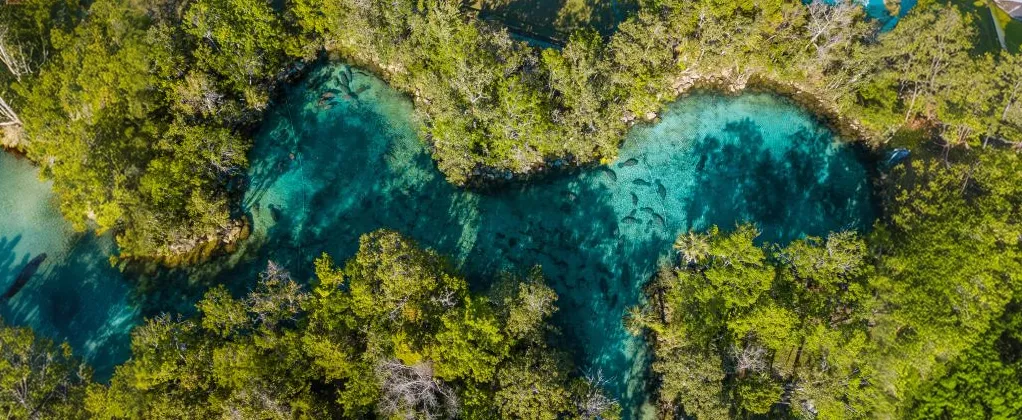
The way spring water develops its pH is one of those things that sounds almost too slow and low tech to be impressive until you think about it properly. Rainwater seeps into the ground and starts a journey that can take decades. It moves through soil, then rock, then layers of limestone that have been sitting there since before anyone was keeping track of anything. As it goes, it picks up bicarbonate and other minerals that limestone releases. Those minerals gently raise the pH over time. Not because someone decided the water should be alkaline. Because that’s just what happens when water and limestone spend a long time together underground.
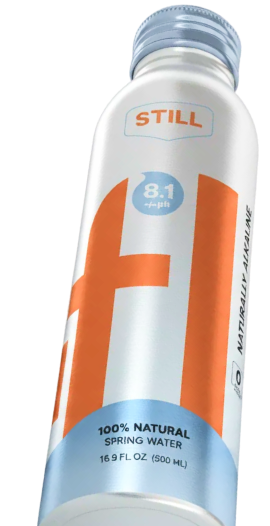
By the time that water surfaces at a spring, it has a pH that reflects its entire underground journey. In Florida, where the limestone aquifer system is one of the largest and most active on earth, that journey produces water with a naturally alkaline pH typically sitting around 8.1. No ionizer. No pH drops. No mineral packet stirred in at a bottling plant. The number on the label reflects something that actually happened underground, not a target that got engineered after the fact.
That distinction might seem like a technicality but it changes what the water actually is. Natural pH backed by a full mineral profile that developed over decades is a fundamentally different product from water that had its pH adjusted in a few minutes by a machine. Both might read 8.1 on a test strip. Only one got there the real way.
The Relationship Between pH, Minerals, and Taste
pH and minerals are not separate features. They are the same story told from two different angles. The minerals that raise a spring water’s pH are also what give it its taste and texture. Bicarbonate, calcium, magnesium: these are not flavor additives. They are part of the water’s composition, and their presence in natural proportions is exactly why good spring water tastes clean and balanced rather than sharp or flat or faintly chemical.
Processed water often illustrates this by contrast. When water gets stripped through reverse osmosis and then has its pH adjusted with an ionizer or mineral concentrate, the result might hit the right number but the taste tells you something is off. Sometimes it’s that soapy or slippery feel that certain high pH bottled waters have. Sometimes it’s just a flatness that does not quite satisfy. That happens because the minerals and the pH did not arrive together through the same natural process. They were assembled separately, and it shows.
Naturally balanced spring water does not have that problem. The pH and the minerals grew up together, so to speak. They exist in ratios that developed over a very long time, and that coherence shows up in every sip as a smoothness that holds across the first glass and the fifth one equally.
Why Naturally Balanced Water Appeals to Health Conscious Consumers
There’s a pattern that shows up again and again with people who take their health seriously. It starts with food. They begin reading labels, caring about ingredients, asking where things came from and how they were grown or raised. Then it spreads. To supplements. To personal care products. To the air quality in their home. And eventually, almost inevitably, to water. Because once you’ve started asking what’s in the things you consume, it becomes pretty hard to keep buying the bottle with the mountain on it without wondering whether that mountain has anything to do with where the water actually came from.
Naturally balanced spring water fits that mindset in a few specific ways:
- The sourcing is real and traceable: a named aquifer or spring system in a verifiable location, not a stock photo and a vague claim
- Nothing was added to achieve the pH or the mineral content; what’s in the water is what the geology put there
- The label tells the truth because the water has nothing to hide: mineral content panels, source information, and natural pH figures are all things a transparent brand shows upfront
- It fits naturally into a wellness routine because there is nothing to explain, justify, or research further; it’s just water that came from a clean place and stayed that way
For people who have already done the work of getting intentional about most of what they consume, spring water is usually the easiest upgrade. The standard it needs to meet is simple: clean source, natural composition, honest handling. That’s it.
Final Thoughts
pH is one of those things that becomes hard to un-notice once you start paying attention to it. You take a sip of water that tastes slightly sharp or oddly flat and you realize there was always something registering in the background that you just never had a name for. Naturally balanced spring water, with a pH that developed alongside a full mineral profile underground, is what removes that background noise entirely. It just tastes like water is supposed to taste. Clean. Smooth. Something you actually want to keep drinking.
If you’re in Florida and you want to know more about what locally sourced, naturally alkaline spring water looks like in practice, the conversation is worth having. Look at where the water comes from, ask about the mineral content, and taste the difference yourself. The answers tend to be pretty straightforward when a brand is confident in what they’re offering.
Frequently Asked Questions
1. What pH level is considered ideal for drinking water?
The EPA considers drinking water safe anywhere between pH 6.5 and 8.5, so there is a fairly wide acceptable range. That said, many people find that water sitting toward the upper end of that range, around pH 8 to 8.5, has a noticeably smoother taste and feels easier to drink in larger amounts. The key is that the pH should reflect the water’s natural composition rather than artificial adjustment. Naturally alkaline spring water that lands around 8.1 due to mineral contact underground tends to taste better and sit more comfortably than water with a higher forced pH that lacks the mineral structure to support it.
2. Can pH affect how well water hydrates you, or is it purely about taste?
Both, and they’re connected. The taste and mouthfeel of water directly affects how much of it you drink throughout the day, and consistent intake is the real driver of good hydration. Water that tastes clean and smooth gets consumed more readily than water that has any off quality to it. Beyond that, the mineral content that accompanies naturally balanced pH, particularly bicarbonate, plays a genuine role in supporting the body’s hydration balance at a cellular level. So the pH is part of a broader mineral picture that influences both how enjoyable the water is and how effectively your body uses it.
3. Is there a difference between water that is naturally alkaline and water that has been made alkaline?
Yes, and it’s a meaningful one. Naturally alkaline water developed its pH through years of contact with mineral rich rock underground. The minerals that raised the pH are part of the water’s original composition and exist in proportions that nature worked out over a long time. Artificially alkaline water typically starts as purified water with its natural mineral content removed and has its pH adjusted afterward through ionization or added mineral concentrate. The end pH number might look similar, but the experience of drinking them is different, and the mineral profile that backs up the pH in naturally alkaline water is something the processed version cannot fully replicate.
4. Why does some alkaline water taste soapy or strange even though the pH looks good on the label?
That soapy or slippery quality that shows up in some alkaline waters is usually a sign that the pH was pushed higher than the mineral content can naturally support. When alkalinity is forced through ionization without a full, naturally balanced mineral profile underneath it, the water can feel almost slick in your mouth. It’s technically alkaline but it doesn’t taste balanced. Naturally alkaline spring water avoids this because the pH and the minerals developed together underground in proportions that produce a clean, smooth taste rather than an artificial one. The difference is pretty obvious once you’ve tasted both.
5. How do I find out the actual pH and mineral content of the spring water I’m buying?
A reputable spring water brand will make this easy. Look for a mineral content panel on the label or the brand’s website that lists specific numbers for calcium, magnesium, bicarbonate, and other naturally occurring minerals, along with the natural pH of the water. Some brands also publish third party water quality reports that verify these figures independently. If a brand is vague about pH or does not publish mineral content at all, that absence of information is worth taking seriously. Water that is genuinely good has nothing to hide, and brands that are proud of what they’re selling tend to make that information easy to find.