Sunrise at a Florida spring has its own kind of quiet. Mist lifts off turquoise water. Cypress knees poke up along the bank. The air smells like limestone, sulfur and wet green leaves. If you grew up here, you know that smell and that color. You have probably jumped off a rope swing into water so clear you could count the fish ten feet down before you hit the surface.
Florida’s springs are more than scenery. They are memory. They are where Boca kids learned to swim, where Cocoa surfers cool off between sets, and where Ocala families still pack a cooler and spend a whole Sunday floating. Crystal River, the Keys, the backwoods springs around Ocala: this is Florida’s original watering hole, long before bottled water was an aisle at Publix.
So here is a question that does not get asked enough. If water is just water, why does bottled water taste so different from brand to brand? Why does some of it taste flat, some of it chalky, and some of it like a science project? And why does real Florida spring water, drawn straight from Florida ground, taste like something else entirely?
The short answer: source matters. Geology matters. And Florida sits on top of one of the most remarkable natural filtration systems on the planet, a bed of ancient limestone that has been shaping our water since long before anyone thought to put it in a bottle. This is a story about rock, time and chemistry. It is provenance, not hype.
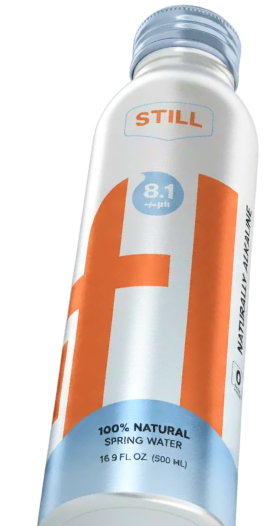
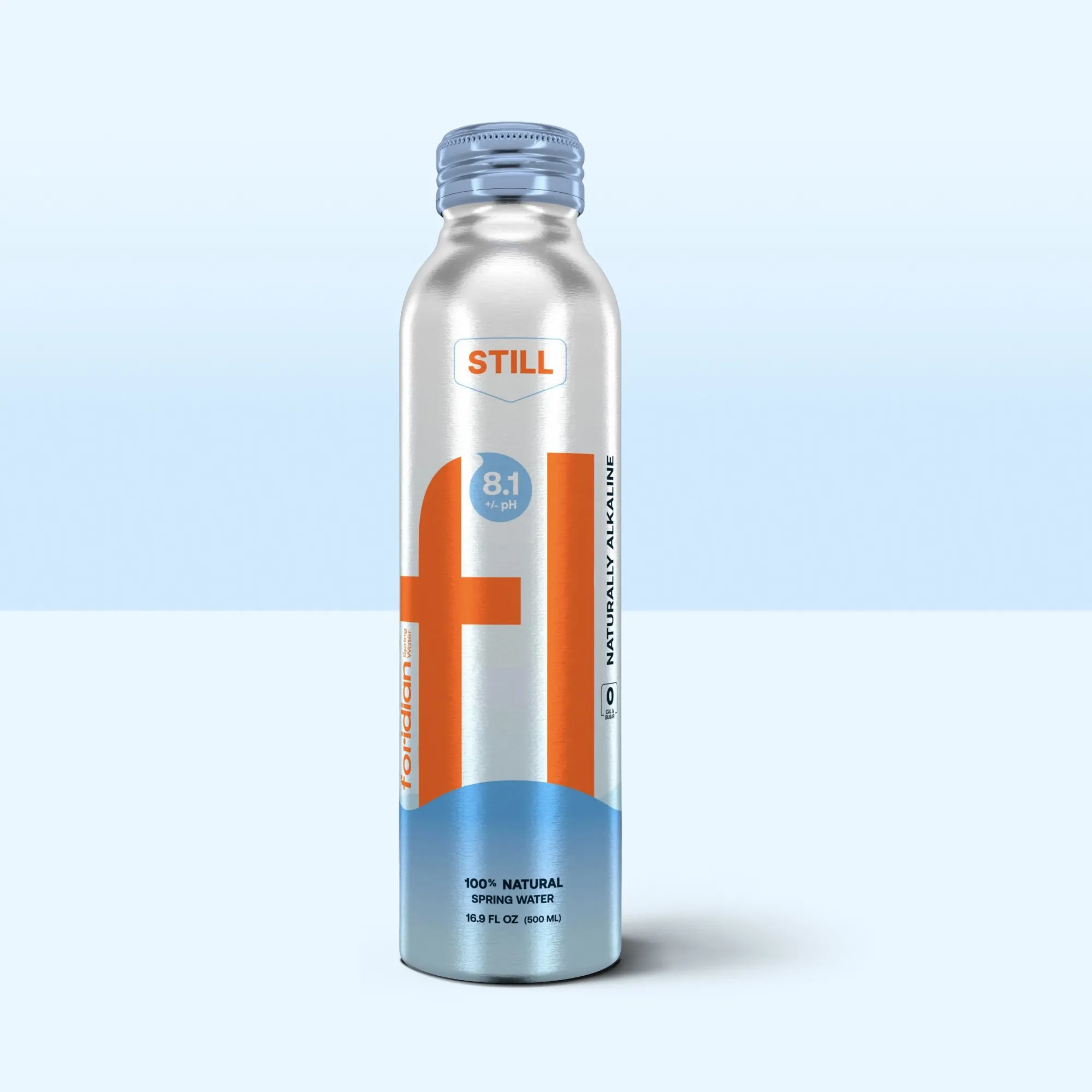
Florida’s aquifer water is different because it moves slowly through ancient limestone in the Floridian Aquifer, which naturally filters it and enriches it with minerals before it ever reaches the surface. The result is water with a naturally balanced pH of about 8.1, with nothing artificial added.
Three things make that possible, and we will walk through each one:
That is the foundation of what we mean by Naturally Alkaline, Totally Florida. Water that nature built over thousands of years, not water that got adjusted in a plant last Tuesday.
To understand why, you have to go back millions of years.
Most people picture an aquifer as an underground lake, a tidy pool in a cave waiting to be tapped. The real thing is stranger and far more impressive.
The Floridian Aquifer is one of the most productive groundwater systems in the world. It is a vast formation of porous limestone that stretches across roughly 100,000 square miles beneath all of Florida and parts of Georgia, Alabama and South Carolina, according to the U.S. Geological Survey’s overview of the aquifer system. It is not a cave and it is not a tank. It is rock, riddled with tiny pores, channels and cavities that work like nature’s plumbing, storing and moving water through solid stone.
Here is where it gets wild. That limestone used to be ocean floor. Millions of years ago, Florida sat under shallow seas. Shells, coral and the skeletons of marine life piled up, compacted and cemented into thick beds of calcium carbonate rock. Over unimaginable stretches of time, that old seabed became the bedrock under the entire peninsula.
The Florida Museum’s explainer on aquifer recharge lays out the process in plain language. Rain soaks through sandy soil, enters the limestone and joins a slow-moving underground system. The trip from the surface to a spring vent can take years, sometimes decades.
This aquifer is not a backup system or a geological curiosity. It is Florida’s primary freshwater source. It supplies drinking water to millions of people, feeds farm wells and powers the state’s famous network of natural springs. When groundwater is under enough pressure, it gets pushed up through cracks in the rock and breaks the surface as a spring. That same mechanism is behind nearly every major spring in the state, from Silver Springs to Wakulla to Crystal River.
A few things are worth sitting with:
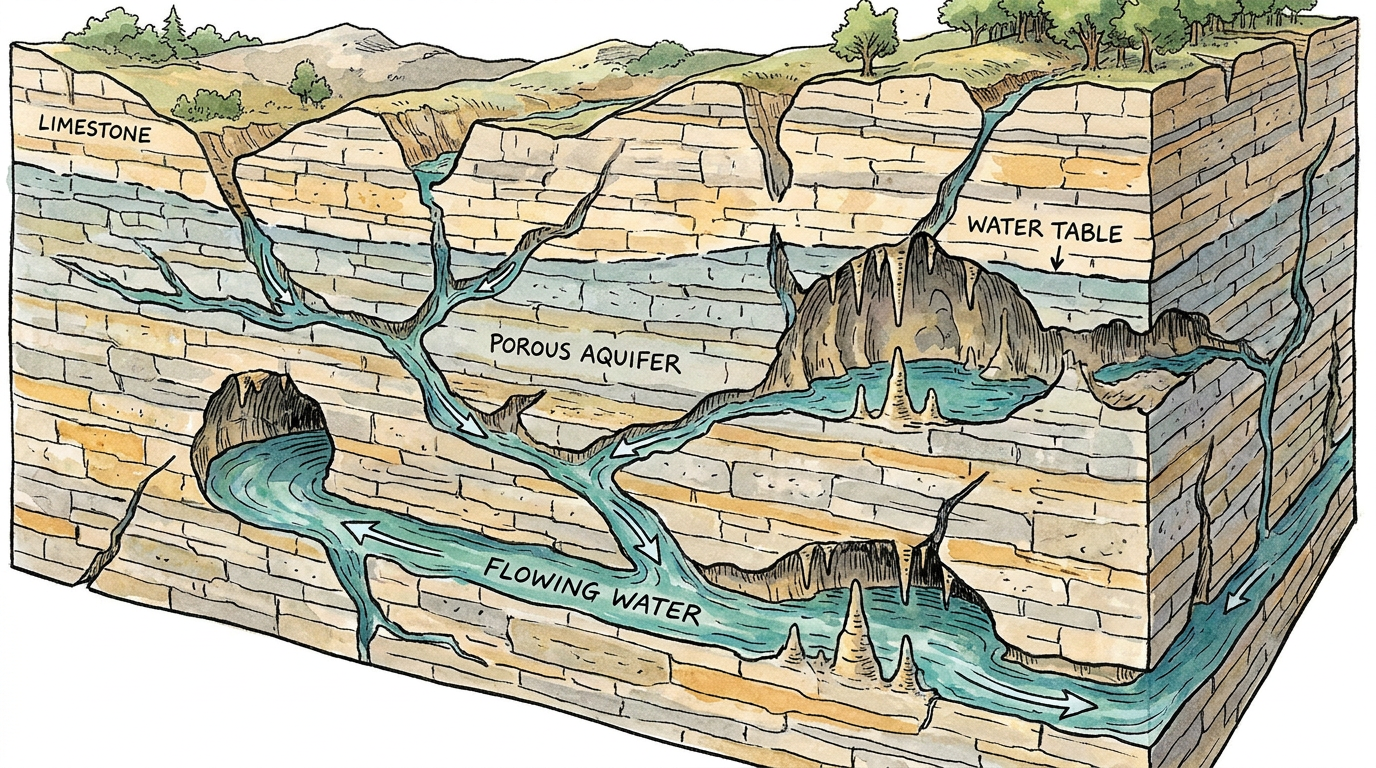
That last point is the real story. The Floridian Aquifer does not just hold water. It transforms it.
This is where geology becomes something you can taste.
As rainwater seeps through Florida’s sandy soil and into the aquifer, it moves slowly through calcium carbonate limestone. During that long, quiet trip, the water does what water has always done to rock. It dissolves a little bit of it.
Duke University’s breakdown of the geology behind Florida’s springs explains how this slow movement through limestone lets water pick up minerals like calcium, magnesium and bicarbonate. It is a gradual exchange between water and stone that happens entirely underground. No machinery. No additives. No human hands.
What comes out the other side is naturally enriched water with a naturally balanced pH. For Floridian Spring Water, that number is a consistent 8.1.
This is the detail that separates real Florida spring water from much of what sits on a store shelf. A lot of “alkaline water” gets its pH the shortcut way. It runs through ionizing machines or gets dosed with mineral additives to push the number up. Nothing is wrong with that chemistry, but it is a different story. One is engineered in a facility. The other is limestone doing what limestone has done for millions of years.
That is what we mean by 8+ pH Strong. The pH is not manufactured. It is earned, one slow conversation between water and rock at a time.
“Mother Nature knows best.” It is one of our brand lines, and it also happens to be an accurate description of a chemical process that is older than the company, the bottle and the entire idea of bottled water.
A quick word on what we will not claim. This is a taste and provenance story, not a medical one. We are not going to tell you alkaline water cures, fixes or reverses anything. What we can tell you, with confidence, is what makes true Florida spring water stand apart: a natural mineral profile, a naturally balanced pH and a smooth, crisp taste that reflects the rock it traveled through. For a deeper look at the minerals themselves, read why Florida spring water stands apart.
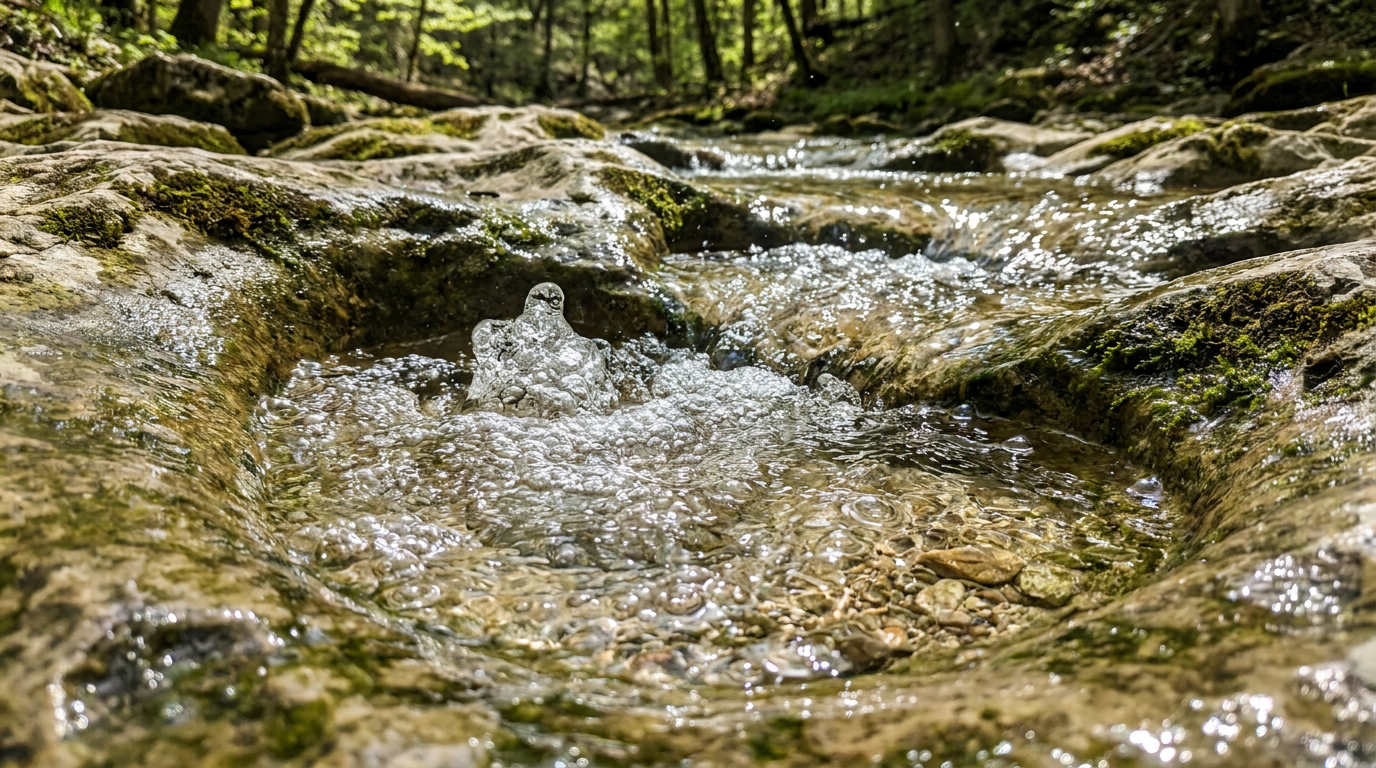
This process does not happen just anywhere. It happens right here, in our backyard.
If the Floridian Aquifer is the engine, Crystal River is where you see it run.
Crystal River and its connected Kings Bay form one of Florida’s largest spring groups, with more than 70 individual springs feeding one system. According to Florida Springs Outstanding Waters’ profile of Crystal River, the Kings Bay group has historically discharged around 580 million gallons of spring water per day. That is not a typo. The Southwest Florida Water Management District’s Kings Bay data documents just how concentrated and rare this spring system is.
Heatherwood Spring is part of this story. It is fed by the same Floridian Aquifer, shaped by the same limestone chemistry and carries the same mineral profile we just walked through. This is not water sourced from wherever is cheapest and shipped across state lines under a generic label. It is Bottled at the Source: one origin, one state, traceable to one specific spring.
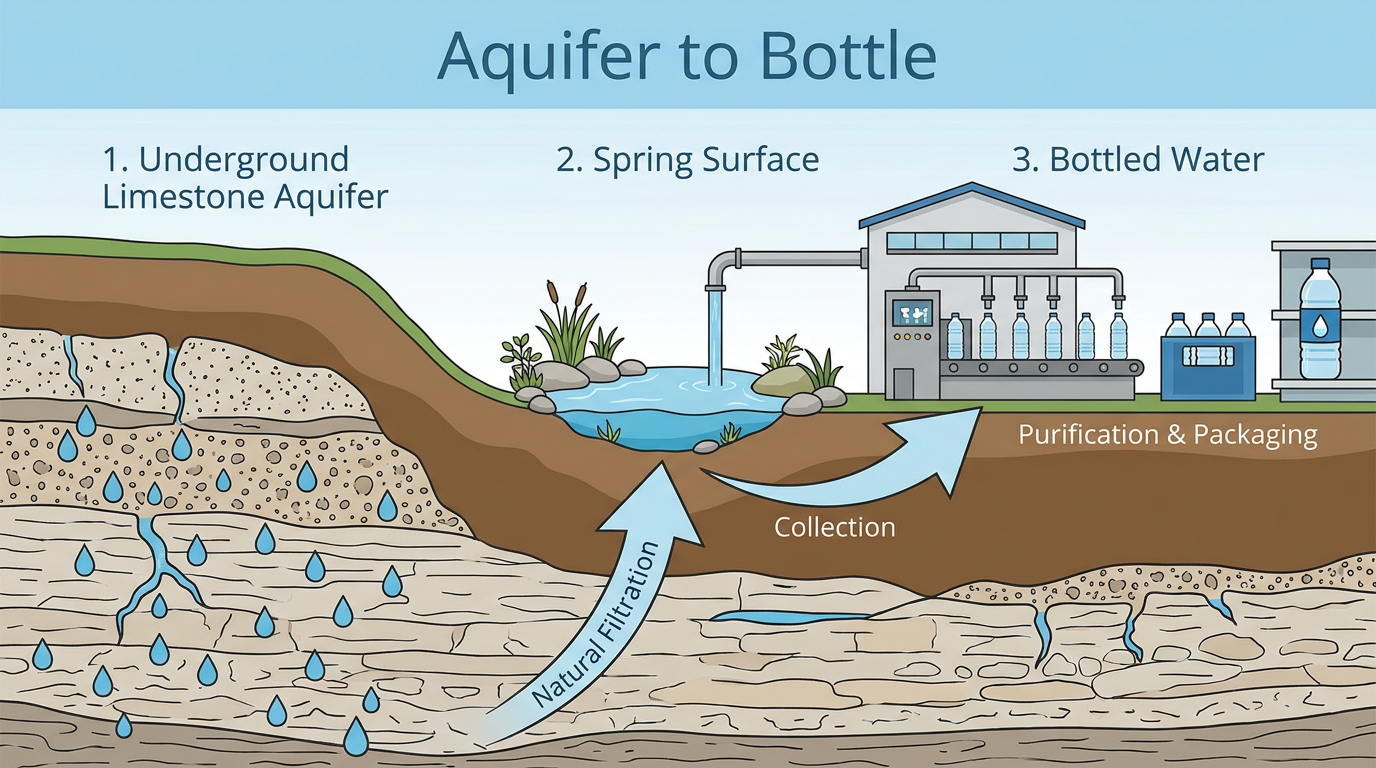
From the moment the water rises from the aquifer, it is gravity-fed through a closed system into our bottling facility. We do not add minerals. We do not strip them out. You get the water exactly as the spring delivers it.
And the taste backs it up. Floridian Spring Water earned a gold medal at the Berkeley Springs International Water Tasting, one of the most respected water competitions in the world.
For a lot of Floridians, Crystal River is personal. It is the Boca old-timers who remember seeing every scallop shell on the bottom from the boat. It is the Cocoa surfers who treat a freshwater spring as the reward after a saltwater morning. It is the Ocala off-roaders who know the backroad spring trails better than the highway exits. And it is the springs kids, and there are a lot of us, who learned to swim in water this clear and have been chasing that feeling ever since.
That is the heart of For Florida, From Florida. We are not borrowing Florida imagery to sell water from somewhere else. The source is real, specific and close enough to visit.
What sets this source apart:
Want the full source story? See where our water comes from.
Knowing where the water comes from is one part. Knowing how it gets from the spring to your hands is the other.
The path is simple, and that is the point:
Every step is short, and that matters. A Sustainable Source of Complete Hydration is not only a tagline. It is a logistics reality. Water bottled near its source travels a fraction of the distance of water trucked in from out of state or shipped from overseas. Less distance means less fuel and a supply chain that makes geographic sense.
The same thinking extends to packaging. Floridian Spring Water comes in BPA-free bottles made with eco-friendly materials, because sourcing responsibly and packaging responsibly are the same conversation.
Then there is the promise that ties it all together: Simple. Pure. Florida. Nothing added after nature did its work. Nothing removed, either. No aggressive processing that strips out the natural minerals. No ionizing step that bumps the pH after the fact. No additives trying to copy what limestone already did over centuries. The water in your bottle is remarkably close to the water that rose from the spring.
If you want to see how this fits into an outdoor, on-the-go Florida routine, read our guide to hydration essentials for Florida’s outdoor lifestyle. And if you are still sorting out what alkaline water means day to day, this piece on Florida spring water for active days connects the geology to real life.
So how does all of this compare to the water most people drink every day?
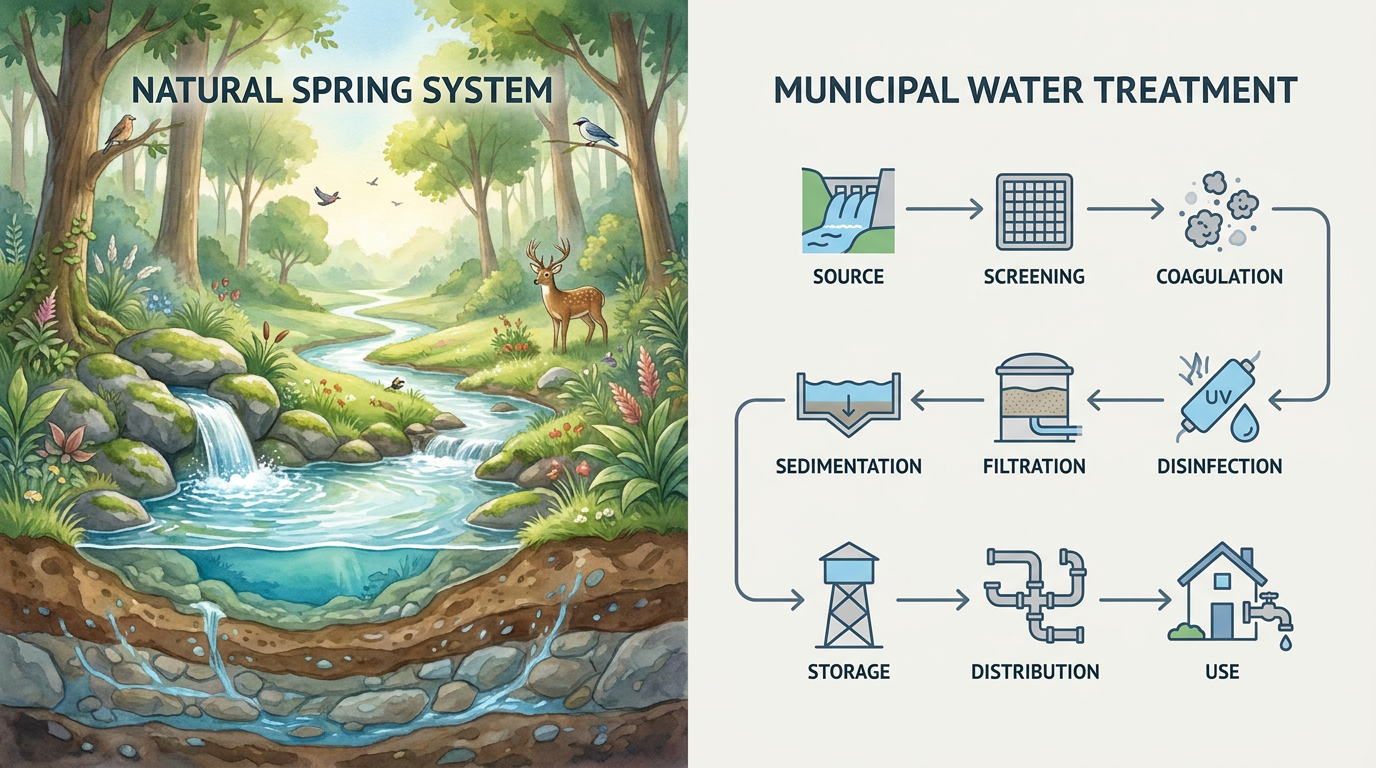
Not every water is trying to be the same thing, and that is fine. Tap water does a huge public job. Processed waters exist for good reasons. This is not about tearing anything down. It is about knowing the categories so the differences mean something.
Municipal tap water is treated. It is filtered, disinfected and balanced to meet public safety standards. That is a different process from water that spends years moving through limestone before anyone touches it. One is engineered for safety at scale. The other arrives already shaped by geology.
Artificially alkalized water is its own category. Many alkaline waters reach their pH through ionizing machines or minerals added after the fact. It is fast, and it happens in a facility. Water that reaches a balanced 8.1 through years of contact with limestone, the natural process described in the USGS research on the aquifer system, tells a very different story. One takes minutes. The other took longer than a human lifetime.
Imported or out-of-state bottled water has a different issue: story, not chemistry. When water comes from wherever is most cost-efficient and travels long distances to reach the shelf, it loses the single-origin identity that makes a source traceable. It is hard to be bottled at the source when the source changes with shipping costs.
Here is how the categories stack up:
| Floridian Spring Water | Tap Water | Artificially Alkalized Water | Out-of-State Bottled Water | |
|---|---|---|---|---|
| Source | Heatherwood Spring, Crystal River | Rivers, lakes or wells | Varies, often municipal | Varies by brand |
| How pH is reached | Naturally, through limestone | Adjusted during treatment | Ionizers or additives | Varies |
| Typical pH | About 8.1 | Close to neutral | Often 9 or higher | Varies |
| Minerals | Naturally occurring, never added or removed | Varies by city | Often added | Varies |
| Distance to Florida shelves | Short, bottled in Florida | Local pipes | Varies | Long |
Florida spring water from the Floridian Aquifer offers something none of those categories can fully copy: a mineral profile and pH shaped by one specific, identifiable geological system. You cannot manufacture that overnight, relocate it or fake it with better copy.
You probably still have a few questions about the science. Let’s clear them up.
What is the Floridian Aquifer?
The Floridian Aquifer is a huge underground system of porous limestone beneath all of Florida and parts of Georgia, Alabama and South Carolina. It covers roughly 100,000 square miles, stores and naturally filters groundwater, and feeds the state’s springs and much of its drinking water.
Is Florida spring water natural?
Yes. True Florida spring water rises from natural springs fed by the Floridian Aquifer. It is filtered by limestone underground before it reaches the surface, and Floridian Spring Water is bottled at the source without adding or removing minerals.
Why is Florida spring water alkaline?
As groundwater moves slowly through calcium carbonate limestone, it dissolves small amounts of calcium, magnesium and bicarbonate. That natural mineral uptake raises the pH. Floridian Spring Water comes out of the ground at a pH of about 8.1, with no machines or additives.
What makes the Crystal River springs unique?
Crystal River and Kings Bay form one of Florida’s largest spring groups, with more than 70 springs that have historically discharged around 580 million gallons of water per day.
How is Floridian Spring Water sourced sustainably?
It is bottled near Heatherwood Spring in Crystal River, so it travels a short distance from source to shelf compared with water shipped in from other states. It is packaged in BPA-free bottles made with eco-friendly materials.
Start to finish, the story is this. Ancient limestone, working quietly underground, turns ordinary rain into water that is naturally filtered and naturally alkaline long before it sees a bottle. That water rises at one specific, storied place, Heatherwood Spring in Crystal River, not a generic facility with a rotating list of sources. From there it travels the shortest possible distance to you, bottled close to home with sustainability built in from the start.
None of it can be rushed. You cannot fast-track millions of years of limestone. You cannot build Kings Bay’s 70-plus springs in a lab. This is geology, not a factory process, and that is exactly the point. Water, How It’s Meant To Be.
This is Florida’s water, shaped by Florida’s land, bottled for the people who call this place home. One hundred percent Floridian water. For Florida, from Florida. Because there’s no place like home.
Learn More about Heatherwood Spring and the story behind every bottle, or Order Today and get Floridian Spring Water delivered to your door with free shipping anywhere in Florida.